
Stop Normalizing Sexualized Conversations at Work
Not everyone experiences the workplace the same way.
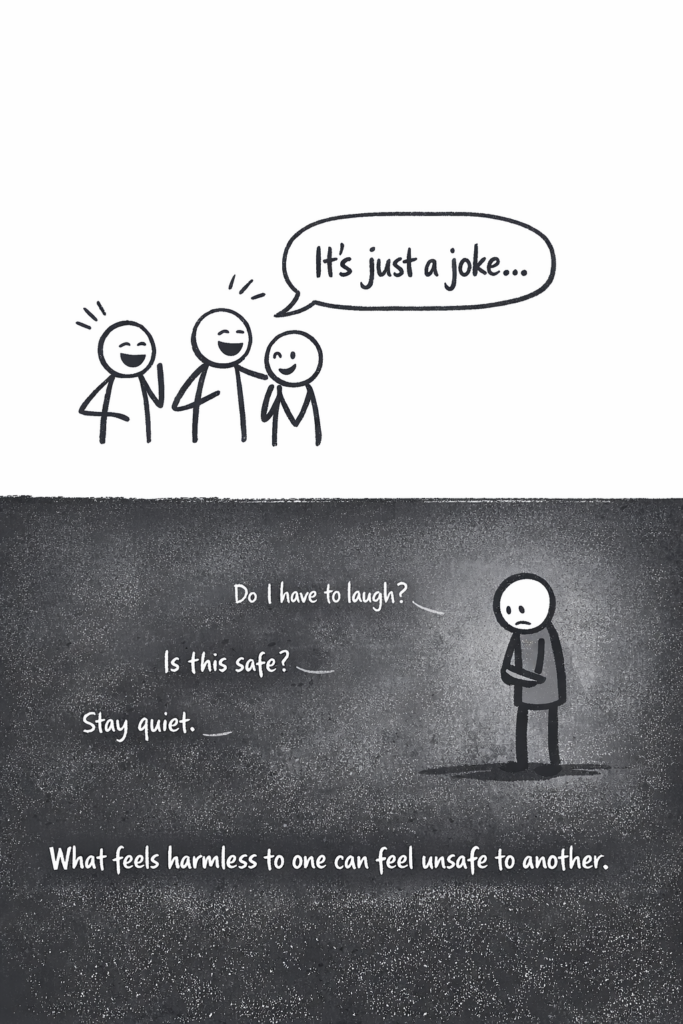
Some people walk in focused and comfortable.
Others walk in carrying histories you cannot see.
Sexualized stories don’t land as “funny” or “open” for everyone.
For some, they land as unsafe.
And once that line is crossed, the environment changes.
This isn’t about sensitivity. It’s about safety.
You don’t know who has lived through:
- sexual trauma
- harassment
- coercion
- misuse of power
And you won’t know—because unsafe environments silence people. So when sexualized content enters the room, people don’t relax.
They assess.
- Do I react?
- Do I stay quiet?
- Is it safe to be honest here?
That mental calculation is the cost of an unsafe culture.
Leaders don’t get to call it harmless
Power changes everything. When a leader tells a sexualized story: it signals what’s acceptable, it sets the tone for the room, it puts pressure on others to tolerate it. Even silence becomes compliance.
That’s not connection. That’s influence – used without awareness, and worse if it is with awareness.
The harm is often invisible
You won’t always see the impact. It shows up as withdrawal, disengagement, people going quiet, a freeze response in the moment.
Not because people are weak but because their nervous system is protecting them.
Intent doesn’t override impact
Most people aren’t trying to harm anyone. But leadership isn’t measured by intent. It’s measured by the environment you create. If people don’t feel safe, something needs to change.
Real leadership requires boundaries
Not everything belongs at work. Psychological safety isn’t built through oversharing. It’s built through awareness.
Before you speak, ask:
- Does this contribute to safety?
- Does this respect the range of lived experience in this room?
If the answer isn’t clear, don’t say it.
Bottom line
Work should not require people to manage preventable discomfort. Especially not from those in power. If we want workplaces where people can actually show up, we have to stop normalizing what quietly makes them shut down.
It isn’t easy to step and say, “stop”, but until we do we will continue to live and work in poisoned environments.
I wonder why this isn’t common knowledge. I know that it isn’t, and I know who you’re talking about. I won’t identify him here, but we really should. I share your concern.
Hello I Work There! This post is intended to be general in nature, but you are correct to assume that it is based on lived experience. We can do better.